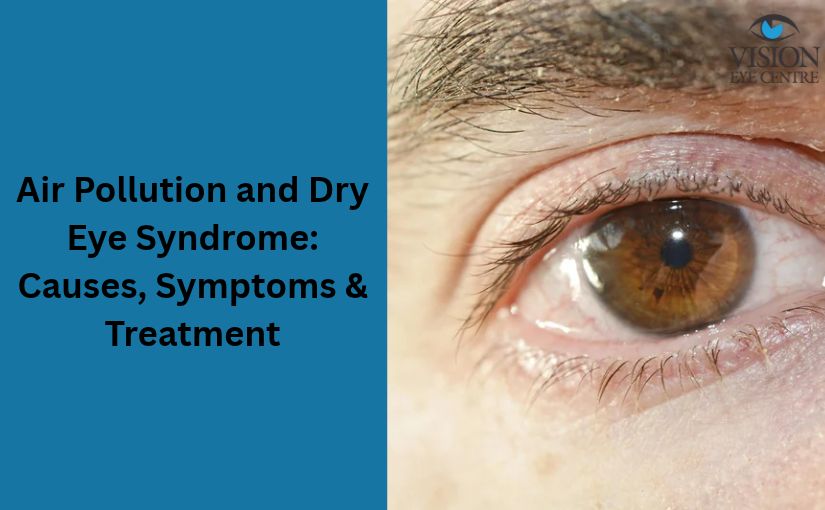
Air Pollution and Dry Eye Syndrome: Causes, Symptoms & Treatment
Nov 18, 2026
While most discussions about air pollution focus on respiratory health, its effects on eye health are often overlooked. Many people experience burning, itching, redness, excessive watering and a persistent feeling of dryness after spending time outdoors in polluted environments.
One condition that may become worse during periods of poor air quality is Dry Eye Syndrome, also known as Dry Eye Disease (DED).
Your eyes depend on a stable tear film to remain comfortable and maintain clear vision. Airborne pollutants, smoke, dust and environmental conditions can disturb this protective layer, leading to irritation and inflammation of the ocular surface.
But can air pollution actually cause dry eye syndrome? How do PM2.5 particles affect your tears? And what can you do to protect your eyes?
Let's understand the connection between air pollution and dry eye disease, its warning signs and the available treatment options.
What Is Dry Eye Syndrome?
Dry Eye Syndrome is a common eye condition that develops when your eyes do not produce enough tears or when tears evaporate too quickly.
A healthy tear film keeps the surface of the eye lubricated, protects it from environmental irritants and helps maintain clear vision.
The tear film consists of three important components:
1. Lipid Layer: The outer oily layer helps slow down tear evaporation and maintains tear-film stability.
2. Aqueous Layer: The middle watery layer provides moisture, oxygen and essential nutrients to the eye surface.
3. Mucin Layer: The inner layer helps tears spread evenly across the cornea and remain attached to the eye surface.
When these components become imbalanced, the tear film may become unstable. This can lead to dryness, irritation, inflammation and fluctuating vision.
Dry Eye Disease generally occurs in two main forms:
-
Aqueous-deficient dry eye: The eyes do not produce sufficient watery tears.
-
Evaporative dry eye: Tears evaporate too quickly, often due to problems with the oil-producing meibomian glands in the eyelids.
Some people experience a combination of both types.
Can Air Pollution Cause Dry Eye Syndrome?
Yes, exposure to air pollution can contribute to ocular surface irritation and may worsen existing dry eye disease.
Research published in The Ocular Surface in January 2025 reviewed 102 preclinical and clinical studies examining the effects of particulate matter and air pollution on the eyes.
The review found associations between pollution exposure and ocular surface problems, including dry eye symptoms, conjunctivitis, itching, burning and inflammation.
Air pollution contains several substances that can affect the eye surface:
1. PM2.5 (Fine Particulate Matter)
PM2.5 refers to airborne particles measuring 2.5 micrometres or smaller.
These particles are produced by vehicle emissions, industrial activities, fuel combustion and other pollution sources.
Due to their small size, PM2.5 particles can remain suspended in the air for extended periods.
When your eyes are exposed to polluted air, these particles can contribute to:
-
Ocular surface irritation.
-
Inflammatory responses.
-
Increased oxidative stress.
-
Tear-film instability.
-
Worsening of existing dry eye symptoms.
2. PM10 (Coarse Particulate Matter)
PM10 includes larger airborne particles such as dust, pollen and other environmental debris.
These particles can come into direct contact with the eye surface and trigger irritation.
Common symptoms include itching, redness, watering and a gritty sensation.
3. Nitrogen Dioxide (NO2)
Nitrogen dioxide is commonly associated with vehicle exhaust and combustion-related pollution.
Exposure to this gas has been linked with ocular irritation and changes in tear-film health.
People who regularly commute through heavily polluted roads may experience increased eye discomfort.
4. Ozone and Other Air Pollutants
Ground-level ozone and other environmental pollutants can irritate exposed tissues.
Depending on the concentration and duration of exposure, these pollutants may contribute to ocular surface inflammation and discomfort.
The combined effect of different pollutants, weather conditions and low humidity may make dry eye symptoms more noticeable.
7 Common Symptoms of Dry Eyes Due to Air Pollution
Pollution-related eye irritation can resemble other eye conditions, including allergic conjunctivitis and eye infections.
Here are seven symptoms you should watch for.
1. Burning Sensation in the Eyes
A burning or stinging sensation is a common complaint among people experiencing dry eye symptoms.
Exposure to smoke, dust and airborne particles can irritate the ocular surface and disturb the tear film.
You may notice burning after travelling outdoors or spending time near busy roads.
2. Persistent Eye Redness
When the ocular surface becomes irritated or inflamed, small blood vessels in the conjunctiva may become more visible.
This can make your eyes appear red.
If redness continues or becomes painful, consult an ophthalmologist instead of assuming it is caused by pollution.
3. Excessive Watering
Dry eyes do not always feel dry.
When the ocular surface becomes irritated, the eyes may produce additional watery tears as a protective response.
However, these reflex tears may not provide the same lubrication as a stable, healthy tear film.
As a result, you may experience both dryness and excessive watering.
4. Gritty or Foreign Body Sensation
Some people describe dry eye discomfort as feeling like sand or dust is trapped inside their eyes.
This sensation can become more noticeable in windy or polluted environments.
Avoid rubbing your eyes because it can increase irritation.
5. Blurred or Fluctuating Vision
An unstable tear film can interfere with the smooth optical surface of the cornea.
You may notice temporary blurred vision, especially while reading, driving or using a computer.
Vision may become clearer after blinking but become blurry again after a short period.
Persistent or sudden changes in vision need professional evaluation.
6. Increased Sensitivity to Light
Dry eye-related inflammation may make your eyes uncomfortable in bright sunlight or under artificial lighting.
You may experience discomfort when using mobile phones, working on computers or going outdoors.
Significant or sudden light sensitivity, particularly with eye pain, should be assessed urgently.
7. Eye Fatigue and Discomfort
Long exposure to polluted environments combined with extended screen use can make your eyes feel tired.
You may experience:
-
Heavy eyelids.
-
Frequent blinking.
-
Difficulty concentrating.
-
Discomfort while reading.
-
A need to close your eyes frequently.
These symptoms may indicate dry eye disease or another ocular surface condition.
Who Is at Higher Risk of Pollution-Related Dry Eye?
Although air pollution can affect anyone, certain groups may be more likely to experience symptoms.
1. People Living in Highly Polluted Cities
Residents of Delhi-NCR and other areas with frequent smog and elevated particulate matter exposure may experience repeated ocular irritation.
2. Office Workers and Computer Users
People who spend several hours using laptops and mobile phones may blink less frequently. This can increase tear evaporation and aggravate dry eye symptoms.
3. Contact Lens Users
Contact lenses can become uncomfortable when the tear film is unstable. Dust and environmental exposure may further increase irritation.
4. Older Adults
Natural tear production and eyelid gland function may change with age, increasing the likelihood of dry eye disease.
5. People with Existing Eye Conditions
Individuals with existing dry eye disease, meibomian gland dysfunction or ocular allergies may experience worsening symptoms during periods of poor air quality.
How to Protect Your Eyes from Air Pollution
Completely avoiding pollution may not be possible, particularly in large cities. However, several practical steps can help reduce exposure and improve eye comfort.
1. Check the AQI Before Going Outdoors
Check your local Air Quality Index before planning outdoor activities.
When air quality is very poor, reduce unnecessary outdoor exposure, especially during periods of heavy smog.
Follow local air-quality advisories and recommendations.
2. Wear Protective Glasses
Wraparound glasses can reduce direct exposure to dust and wind.
They are particularly useful for people who travel frequently on motorcycles or spend considerable time outdoors.
Remember that ordinary glasses cannot completely block fine airborne pollutants.
3. Use Lubricating Eye Drops
Artificial tears may help restore moisture and relieve mild dryness.
Preservative-free lubricating eye drops are often preferred when frequent application is required.
However, the right product depends on the severity and underlying cause of your symptoms.
Avoid using steroid, antibiotic or redness-relief eye drops without medical advice.
4. Maintain Good Indoor Air Quality
Indoor air can also contain pollutants from cooking, smoke, dust and poor ventilation.
Consider these measures:
-
Use a suitable HEPA air purifier.
-
Keep windows closed when outdoor pollution is high.
-
Clean dust from indoor surfaces regularly.
-
Avoid smoking indoors.
-
Maintain comfortable indoor humidity.
5. Follow the 20-20-20 Rule
Long screen exposure can aggravate dry eye symptoms.
Follow the 20-20-20 rule:
Every 20 minutes, look at an object approximately 20 feet away for at least 20 seconds.
Also, remember to blink regularly while working on computers and mobile phones.
6. Stay Hydrated
Drink sufficient water throughout the day.
Adequate hydration supports normal body functions, although drinking extra water alone is not a treatment for dry eye disease.
7. Maintain Proper Contact Lens Hygiene
If you wear contact lenses, follow your eye specialist's instructions carefully.
Avoid wearing lenses when your eyes are irritated or excessively dry. Switch to spectacles temporarily if necessary.
Never use tap water to clean or store contact lenses.
How Is Dry Eye Syndrome Diagnosed?
If you regularly experience burning, redness, dryness or excessive watering, an ophthalmologist can perform a detailed eye examination.
The diagnosis may involve several tests depending on your symptoms.
1. Tear Break-Up Time (TBUT)
This test evaluates how long the tear film remains stable before dry spots begin to appear on the eye surface.
A shorter tear break-up time may indicate tear-film instability.
2. Schirmer's Test
Schirmer's test measures tear production using a small strip of special filter paper placed near the lower eyelid.
It helps assess whether the eyes produce sufficient tears.
3. Ocular Surface Examination
An ophthalmologist may use a slit-lamp microscope to examine the cornea, conjunctiva and eyelids.
Special diagnostic dyes may be used to identify areas of dryness or damage on the ocular surface.
4. Meibomian Gland Assessment
The meibomian glands produce the oily component of tears.
If these glands become blocked or do not function properly, tears may evaporate too quickly.
An assessment can help identify evaporative dry eye disease.
What Are the Treatment Options for Dry Eye Syndrome?
Dry eye treatment depends on the severity of the condition, tear-film stability and the underlying cause.
There is no single treatment suitable for everyone.
Common treatment options include:
1. Artificial Tears
Lubricating eye drops help supplement natural tears and reduce dryness.
Preservative-free formulations may be recommended for people who need frequent use.
2. Prescription Eye Drops
In some cases, an ophthalmologist may prescribe medication to manage ocular surface inflammation or improve tear production.
These treatments should only be used under professional supervision.
3. Warm Compresses and Eyelid Hygiene
For people with meibomian gland dysfunction, warm compresses and appropriate eyelid cleaning may help improve oil secretion.
The recommended technique and frequency depend on the condition.
4. Advanced Dry Eye Treatments
Patients with persistent symptoms may benefit from additional treatment options depending on the underlying problem.
An eye specialist may evaluate whether specialised therapies or procedures are appropriate.
The aim is to improve tear-film function, reduce inflammation and maintain a healthy ocular surface.
When Should You Visit an Eye Specialist?
Occasional dryness after spending time outdoors may improve once you move away from polluted air.
However, persistent symptoms should not be ignored.
Consult an ophthalmologist if you experience:
-
Frequent burning or itching.
-
Repeated episodes of eye redness.
-
Persistent dryness despite using lubricating drops.
-
Excessive watering.
-
Fluctuating or blurred vision.
-
Discomfort while wearing contact lenses.
-
Difficulty working or reading due to eye irritation.
Seek urgent medical attention for sudden vision loss, severe eye pain or a painful red eye.
Early evaluation can help identify whether your symptoms are related to dry eye disease, allergies, infection or another eye condition.
Dry Eye Treatment at Vision Eye Centre, Delhi
If you regularly experience dry eyes, burning, redness or irritation, identifying the underlying cause is important before starting treatment.
Vision Eye Centre provides comprehensive eye-care services, including evaluation and management of dry eye conditions.
The ophthalmology team can assess tear-film stability, examine the ocular surface and determine an appropriate treatment approach based on individual needs.
People searching for dry eye treatment in Delhi can visit Vision Eye Centre for professional eye evaluation.
The centre has two locations in Delhi:
Siri Fort Road Centre
19, Siri Fort Road, Near Gargi College, New Delhi – 110049.
West Patel Nagar Centre
12/27, West Patel Nagar, Near Arya Samaj Mandir, New Delhi – 110008.
For appointments and further information:
Website: Vision eye center best eye hospital in delhi
Phone: +91 9711004422
Do not delay an eye examination if dryness, irritation or blurred vision is affecting your daily activities.
Frequently Asked Questions (FAQs)
1. Can air pollution cause dry eye syndrome?
Air pollution can contribute to ocular surface irritation and tear-film instability. Research has found associations between particulate matter exposure and dry eye disease. People with existing dry eye conditions may experience worsening symptoms during periods of poor air quality.
2. How does PM2.5 affect eye health?
PM2.5 consists of fine airborne particles that can contribute to oxidative stress and inflammation on the ocular surface. Exposure may aggravate burning, redness, dryness and irritation.
3. Why do my eyes feel dry and itchy when pollution levels are high?
Dust, smoke and airborne pollutants can irritate the eye surface and disturb the tear film. This may lead to dryness, itching, burning and excessive watering.
4. Can dry eyes caused by pollution be treated?
Yes. Treatment depends on the underlying cause and severity. An ophthalmologist may recommend artificial tears, prescription medication, eyelid hygiene or other dry eye treatments.
5. Does air pollution increase dry eye symptoms during winter?
Air pollution may worsen dry eye symptoms during winter, particularly when combined with low humidity, cold winds and prolonged exposure to indoor heating. Research has also reported associations between air pollutants, lower temperatures and increased dry eye-related clinic visits.
6. Are artificial tears helpful for pollution-related dry eyes?
Artificial tears can help relieve dryness and improve eye comfort by supplementing the natural tear film. Preservative-free formulations may be recommended for frequent use. Consult an eye specialist if symptoms persist.
7. Can wearing contact lenses worsen dry eyes during pollution?
Contact lenses may become less comfortable when the tear film is unstable. Environmental dust and pollution can further aggravate irritation. People experiencing discomfort should consider using spectacles and consult their eye specialist.
8. When should I visit an eye doctor for dry eyes?
Visit an ophthalmologist if you experience persistent dryness, burning, redness, excessive watering or fluctuating vision. Severe pain or sudden vision changes require urgent medical attention.
Conclusion
Air pollution and dry eye syndrome have a meaningful connection. Exposure to PM2.5, PM10, smoke and other airborne pollutants can irritate the ocular surface, disturb tear-film stability and worsen existing dry eye symptoms.
People living in highly polluted cities should take extra care of their eye health, particularly during winter when smog and poor air quality are common.
Reducing outdoor exposure, maintaining indoor air quality, using appropriate lubricating eye drops and following good screen habits can help reduce discomfort.
If dryness, burning, redness or blurred vision continues, consult an ophthalmologist for a proper examination.
Healthy eyes need a stable tear film and protection from environmental irritants. Do not ignore persistent dry eye symptoms.
Medical Disclaimer
This article is intended for general educational purposes only. It does not replace professional medical advice, diagnosis or treatment. Air pollution may aggravate dry eye symptoms, but not every case of dry eye is caused by pollution. Consult a qualified ophthalmologist for an accurate diagnosis and an appropriate treatment plan.