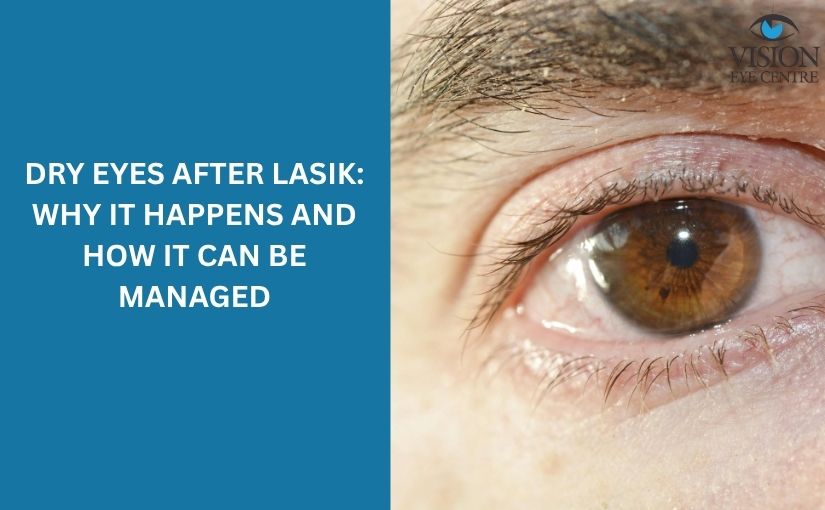
Dry Eyes After LASIK: Why It Happens and How It Can Be Managed
Oct 1, 2026
Dry Eyes After LASIK: Why It Happens and How It Can Be Managed
LASIK is a widely performed refractive eye procedure used to reduce dependence on glasses or contact lenses. While most patients recover well, dry eyes after LASIK are a common temporary side effect during the healing period.
Patients may notice dryness, burning, irritation, a gritty sensation, fluctuating vision, or increased sensitivity to light after the procedure. These symptoms usually improve as the eyes heal, although some patients may experience symptoms for longer and require additional treatment.
Understanding why dry eye occurs after LASIK and how it can be managed can help patients prepare for recovery.
At Vision Eye Centre, an NABH-accredited eye hospital in Delhi, patients undergo pre-operative assessment and post-operative follow-up to monitor healing and manage symptoms such as dry eye.
What Is Dry Eye After LASIK?
Dry eye occurs when the eyes do not maintain a healthy tear film. The tear film keeps the surface of the eye lubricated and also contributes to clear vision.
During LASIK, the corneal tissue is reshaped to correct refractive errors such as myopia, hyperopia, and astigmatism. The procedure can temporarily affect some of the corneal nerves involved in normal tear production and sensation.
As the cornea heals, tear production and the normal feedback mechanism between the cornea and the tear glands can gradually recover.
This is one reason why patients may experience dry-eye symptoms after LASIK.
Why Does LASIK Cause Dry Eyes?
1. Temporary Changes to Corneal Nerves
The cornea contains many microscopic nerves that help maintain corneal sensation and participate in the regulation of tear production.
During LASIK, some of these nerves are affected as the corneal flap is created and the underlying corneal tissue is reshaped.
Reduced corneal sensation can temporarily affect the signals involved in tear production.
As the nerves recover, these functions can gradually improve.
2. Reduced Tear Production
Following LASIK, some patients may temporarily produce fewer tears.
Reduced tear production can lead to:
-
Burning
-
Stinging
-
Grittiness
-
Redness
-
Fluctuating vision
-
Light sensitivity
-
Eye fatigue
The severity and duration vary from person to person.
3. Tear Film Instability
Even when tear production appears adequate, the tear film may not remain stable on the surface of the eye.
An unstable tear film can cause vision to fluctuate, particularly during activities such as:
-
Reading
-
Computer work
-
Smartphone use
-
Watching television
-
Driving
-
Working in air-conditioned environments
4. Reduced Blinking
People tend to blink less frequently when concentrating on a digital screen.
After LASIK, reduced blinking can make dry-eye symptoms more noticeable because blinking helps spread the tear film evenly across the corneal surface.
What Does Dry Eye Feel Like After LASIK?
Dry-eye symptoms can vary between patients.
Common symptoms include:
-
Dryness
-
Burning or stinging
-
Gritty or sandy sensation
-
Redness
-
Watery eyes
-
Sensitivity to light
-
Eye fatigue
-
Fluctuating vision
-
Difficulty wearing contact lenses
-
Discomfort during prolonged screen use
Interestingly, excessive watering can also occur with dry eye. When the eye surface becomes irritated, it may produce reflex tears that do not provide the same long-lasting lubrication as a stable tear film.
How Long Does Dry Eye Last After LASIK?
Dry-eye symptoms are often most noticeable during the early period after LASIK and generally improve as the eyes recover.
However, recovery varies depending on factors such as:
-
Baseline dry-eye status
-
Corneal nerve recovery
-
Age
-
Environmental conditions
-
Screen exposure
-
Contact lens history
-
Medications
-
Other eye conditions
-
Individual healing response
Some patients may continue to experience symptoms for several weeks or months.
If symptoms are persistent, worsening, or significantly affecting daily activities, an ophthalmologist should evaluate the eyes.
Who Is More Likely to Develop Dry Eye After LASIK?
Patients with pre-existing dry eye may have a higher risk of experiencing more noticeable symptoms following refractive surgery.
Other factors that may contribute include:
-
Long screen time
-
Reduced blinking
-
Contact lens use
-
Certain medications
-
Autoimmune conditions
-
Environmental dryness
-
Air conditioning
-
Existing ocular surface disease
This is why evaluating the ocular surface before LASIK is an important part of determining whether a patient is suitable for surgery.
How Is Dry Eye Evaluated Before LASIK?
A thorough LASIK evaluation should look beyond the patient's glasses prescription.
An ophthalmologist may assess:
-
Tear-film stability
-
Tear production
-
Corneal health
-
Corneal thickness
-
Corneal shape
-
Eye surface
-
Meibomian gland function
-
Existing inflammation
-
Overall ocular health
Tests such as corneal topography and other specialized measurements may also be performed when required.
If significant dry eye is present, it may be treated before refractive surgery is considered.
How Can Dry Eyes After LASIK Be Managed?
Management depends on the severity and underlying cause.
1. Prescribed Lubricating Eye Drops
Artificial tears can help replace or supplement the natural tear film.
Your ophthalmologist may recommend preservative-free lubricating drops, particularly when frequent use is required.
Patients should follow the eye-drop schedule recommended by their doctor rather than using eye drops randomly.
2. Take Regular Screen Breaks
Extended screen use can worsen dryness because people tend to blink less while concentrating.
A simple approach is to follow the 20-20-20 rule:
Every 20 minutes, look at something approximately 20 feet away for about 20 seconds.
Taking regular breaks can reduce digital eye strain and encourage more frequent blinking.
3. Blink More Frequently
Consciously blinking more often can help spread tears across the surface of the eye.
This can be particularly useful while:
-
Working on a computer
-
Using a smartphone
-
Reading
-
Watching television
4. Stay Hydrated
Maintaining adequate fluid intake supports overall health and may help maintain normal tear production.
However, hydration alone is not a treatment for clinically significant dry eye.
5. Avoid Direct Airflow
Fans, air conditioners, and car vents can increase tear evaporation.
Try to avoid having air blow directly toward your eyes.
6. Manage Environmental Factors
Dry or dusty environments can aggravate symptoms.
Depending on the environment, measures such as reducing exposure to smoke, using appropriate humidification, and protecting the eyes from wind or dust may help.
7. Treat Underlying Eyelid or Meibomian Gland Problems
The meibomian glands produce oils that help slow tear evaporation.
If these glands are not functioning properly, the tear film may evaporate more quickly.
An ophthalmologist may recommend treatment directed at the eyelids and meibomian glands when required.
8. Additional Medical Treatment
Patients with persistent or more significant dry eye may require additional treatment.
Depending on the cause, an ophthalmologist may consider:
-
Anti-inflammatory eye drops
-
Prescription dry-eye medication
-
Punctal plugs in selected cases
-
Meibomian gland treatment
-
Treatment for eyelid inflammation
-
Other therapies for ocular surface disease
Treatment should be individualized after an examination.
Can Dry Eye Affect Vision After LASIK?
Yes.
A healthy tear film contributes to optical quality. When the tear film becomes unstable, patients may experience fluctuating or temporarily blurred vision.
For example, vision may appear clear immediately after blinking but become slightly blurred again after several seconds.
This type of fluctuation can be particularly noticeable during reading or prolonged computer use.
Persistent visual changes should be assessed to determine whether they are caused by dry eye or another post-operative issue.
Does Dry Eye Mean LASIK Was Unsuccessful?
No.
Experiencing dry eye after LASIK does not automatically mean that the procedure was unsuccessful.
Dryness can be part of the normal healing process. However, persistent symptoms should still be discussed with your ophthalmologist.
Your doctor can determine whether the symptoms are consistent with normal recovery or whether another condition needs to be treated.
Can LASIK Be Performed If You Already Have Dry Eyes?
It depends on the severity and cause of the dry eye.
Patients with significant untreated ocular surface disease may not be ideal candidates for LASIK until the condition has been addressed.
A proper pre-operative evaluation can help determine:
-
Whether LASIK is appropriate
-
Whether dry eye needs treatment first
-
Whether another refractive procedure may be more suitable
-
What recovery expectations are reasonable
The decision should be based on an individual eye examination rather than the glasses prescription alone.
LASIK vs Other Refractive Procedures and Dry Eye
LASIK is not the only option for reducing dependence on glasses.
Depending on a patient's prescription, corneal measurements, age, lifestyle, and eye health, an ophthalmologist may discuss procedures such as:
-
LASIK
-
SMILE Pro
-
Contoura Vision
-
ICL
-
Other suitable refractive procedures
Each procedure has different eligibility requirements and potential benefits and risks.
The most appropriate procedure can only be determined after a detailed evaluation.
When Should You Contact Your Eye Doctor After LASIK?
Some dryness and mild discomfort can occur during recovery, but you should contact your ophthalmologist if you experience:
-
Severe or increasing eye pain
-
Significant redness
-
Sudden reduction in vision
-
Persistent or worsening blurred vision
-
Marked light sensitivity
-
Discharge from the eye
-
Symptoms that are not improving as expected
-
Any sudden change that concerns you
Do not stop or change prescribed post-operative medication without consulting your doctor.
Frequently Asked Questions About Dry Eyes After LASIK
Is dry eye normal after LASIK?
Dry-eye symptoms are common during the healing period after LASIK. The severity and duration vary between patients, and persistent symptoms should be evaluated by an ophthalmologist.
How can I reduce dry eyes after LASIK?
Follow your doctor's prescribed eye-drop schedule, take regular screen breaks, blink frequently, avoid direct airflow, and follow all post-operative instructions.
Can I use artificial tears after LASIK?
Artificial tears are commonly used after LASIK, but the type and frequency should follow your ophthalmologist's recommendation. Preservative-free options may be recommended when frequent lubrication is required.
Can dry eye cause blurry vision after LASIK?
Yes. An unstable tear film can cause fluctuating or temporarily blurred vision. Persistent vision changes should be evaluated to rule out other causes.
How long does post-LASIK dry eye last?
Many patients experience improvement as the eyes heal, but the duration varies. Some patients may have symptoms for several weeks or months and may require additional treatment.
Can I get LASIK if I already have dry eyes?
Some patients with mild dry eye may still be candidates, while significant untreated ocular surface disease may require treatment before surgery. A detailed pre-operative assessment is essential.
Is SMILE Pro better than LASIK for dry eyes?
There is no single procedure that is best for every patient. LASIK and SMILE Pro differ in their surgical techniques and may have different effects on the ocular surface. Your ophthalmologist can recommend the appropriate procedure after evaluating your eyes.
Conclusion
Dry eyes after LASIK are a common concern during the recovery period. Changes to corneal nerves, tear production, and tear-film stability can temporarily cause dryness, irritation, fluctuating vision, and discomfort.
For many patients, symptoms improve as the eyes heal. Proper pre-operative assessment, prescribed lubrication, regular follow-up, and appropriate treatment of underlying ocular surface problems can help support recovery.
If you are considering LASIK or experiencing persistent dry-eye symptoms after refractive surgery, consult an ophthalmologist for an individual assessment.
Vision Eye Centre provides comprehensive refractive and eye-care services, including LASIK, SMILE Pro, Contoura Vision, cataract surgery, corneal care, and treatment of ocular surface conditions. Patients searching for an eye hospital in Delhi can consult the specialists at Vision Eye Centre for a detailed eye evaluation.
Medical Disclaimer: This article is for general educational purposes and does not replace an examination or medical advice from a qualified ophthalmologist.