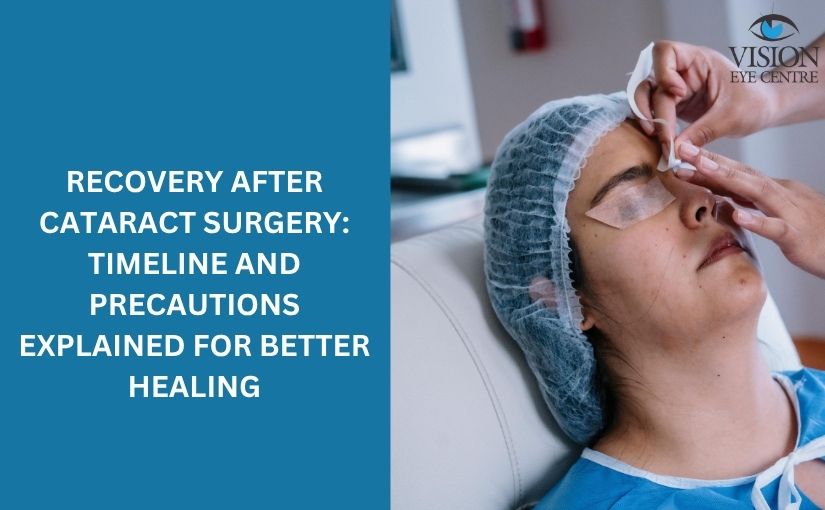
Recovery After Cataract Surgery: Timeline and Precautions Explained for Better Healing
Apr 1, 2026
Recovery After Cataract Surgery: Timeline and Precautions Explained for Better Healing
You have just had cataract surgery — or you are about to — and you want to know exactly what to expect. How soon will you see clearly? What are you not allowed to do? When can you drive again? These are some of the most important questions Indian patients ask before and after the procedure.
The good news: recovery after cataract surgery is remarkably smooth for most patients, especially with modern phacoemulsification (small-incision technique). But knowing the recovery timeline and following the right precautions can make a significant difference to your outcomes.
At Vision Eye Centre, we believe informed patients heal better. This comprehensive guide covers everything you need to know about the healing process after cataract surgery.
What Happens During Cataract Surgery?
During phacoemulsification — the standard technique used at Vision Eye Centre — a tiny incision (less than 3mm) is made at the edge of the cornea. The cloudy natural lens is broken up using ultrasound energy and carefully removed. A clear artificial intraocular lens (IOL) is then folded and inserted through the same small opening, where it unfolds and settles into position. The incision is self-sealing and typically requires no stitches. The entire procedure takes 15 to 25 minutes under local anaesthesia, and you go home the same day.
Cataract Surgery Recovery Timeline: Week by Week
Day 1 — The Day of Surgery
Immediately after the procedure, your eye will be covered with a protective shield. You may notice mild blurring, haziness, or a slight reddish tint to your vision. This is completely normal. You will be given antibiotic and anti-inflammatory eye drops before you leave the clinic. Mild discomfort, watering, or a scratchy feeling is common in the first few hours. Rest at home, avoid bending forward, and keep your protective eye shield on, especially when sleeping.
Day 2 to Day 7 — First Week After Surgery
Most patients are pleasantly surprised by how quickly their vision improves in the first week. By the second or third day, many people report noticeably clearer vision — sometimes seeing colours more vividly than they have in years, since the cloudy lens is gone. During this period, continue using your prescribed eye drops as directed (typically antibiotic drops 4 times daily and anti-inflammatory drops 4–6 times daily). Avoid rubbing the eye, swimming, and strenuous activity. Do not let soap, shampoo, or water enter the operated eye. Wear sunglasses outdoors. Attend your Day 1 post-operative review at the clinic.
Week 2 to Week 4 — First Month of Recovery
Vision continues to stabilise and sharpen throughout the first month. The operated eye adjusts to the new intraocular lens, and the brain adapts to the new level of clarity. Some patients may experience mild fluctuation in vision during this period — this is normal. Antibiotic drops are usually tapered off by the end of the first week, while steroid drops may continue for 3–4 weeks. Most patients can return to desk work and light activities within 1 week. Avoid heavy lifting (over 5 kg), intense exercise, and swimming pools for at least 4 weeks.
Month 2 to Month 3 — Full Stabilisation
By 6–8 weeks after cataract surgery, the majority of patients have fully stable vision. At this point, your ophthalmologist will assess your final refraction (prescription), and you can be fitted for new glasses if needed. Activities like swimming can generally resume after 6 weeks. Contact sports should be avoided for at least 2–3 months.
Key Precautions After Cataract Surgery
Following these cataract surgery precautions diligently is one of the most important factors in a smooth recovery after eye surgery:
Do's After Cataract Surgery
- Use all prescribed eye drops exactly as directed — do not skip or self-reduce doses
- Wear the protective eye shield while sleeping for at least the first week
- Wear UV-protective sunglasses when going outdoors
- Keep your follow-up appointments at the clinic (Day 1, Week 1, Month 1)
- Wash hands thoroughly before instilling eye drops
- Eat a balanced diet rich in antioxidants (carrots, spinach, amla, broccoli)
- Rest adequately and avoid excessive screen time in the first week
Don'ts After Cataract Surgery
- Do not rub or press the operated eye — this is the single most important restriction
- Do not get water directly in the eye when bathing — use a damp cloth to clean around the eye
- Do not swim or visit a pool, hot tub, or water park for at least 6 weeks
- Do not lift heavy objects or engage in strenuous exercise for 4 weeks
- Do not wear eye makeup or apply anything near the eye for at least 2 weeks
- Do not drive until your eye doctor confirms your vision is adequate for driving (usually within 1–3 days for most patients)
- Do not stop eye drops early without consulting your doctor, even if vision seems fine
- Do not miss any scheduled follow-up visits
Normal vs. Concerning Symptoms After Cataract Surgery
It is important to know what is normal during healing after cataract surgery and what requires urgent attention:
Normal symptoms: Mild blurring (improving over days), slight redness, mild watering, sensitivity to light, floaters (mild), a scratchy sensation. These typically resolve within a few days to weeks.
Symptoms requiring immediate attention — contact your eye specialist right away if you notice:
- Sudden severe pain in the operated eye
- Sudden significant loss of vision
- Increasing redness that gets worse after the first day
- Discharge or pus from the eye
- Flashes of light or a curtain across vision (could indicate retinal detachment)
- Increasing floaters suddenly appearing
- Nausea and vomiting with severe eye pain (could indicate elevated pressure)
Special Considerations for Indian Patients
In the Indian context, there are some specific post-operative situations to be mindful of:
- Dust and pollution: Indian environments — especially in cities and rural areas — have high dust and pollution levels. Wear wrap-around sunglasses consistently when outdoors during recovery.
- Heat and sweat: During India's summer months, excess sweating around the face is common. Be careful that sweat does not drip into the operated eye. Keep the eye area clean with a dry cloth.
- Yoga and exercise: Avoid inverted yoga poses, breath-holding exercises, and any activity that raises intraocular pressure for at least 4 weeks post-surgery.
- Religious rituals: Some patients wish to perform puja or other rituals involving smoke, incense, or tilak near the eyes. Discuss this with your doctor and take precautions to protect the operated eye.
- Travel: Air travel is generally permitted within a few days after uncomplicated surgery, but discuss with your treating doctor first.
Posterior Capsule Opacification (PCO) — The "Secondary Cataract"
Some months or years after cataract surgery, a small percentage of patients develop a condition called posterior capsule opacification (PCO), where the thin membrane behind the IOL becomes cloudy. This causes vision to become blurry again — but it is easily treated with a simple, painless 5-minute laser procedure called Nd:YAG laser capsulotomy, which instantly restores clear vision. There is no surgery involved, and recovery is immediate.
Frequently Asked Questions (FAQ)
Q1: How long does it take to fully recover after cataract surgery?
Answer: Most patients achieve clear, stable vision within 4–6 weeks. Vision improves rapidly in the first few days, but complete healing and final prescription stabilisation takes about 4–8 weeks. Some patients with premium IOLs may take slightly longer to adapt to their new lens.
Q2: When can I watch TV and use my phone after cataract surgery?
Answer: Light screen use is generally acceptable after 24 hours, as it does not physically harm the operated eye. However, limit screen time in the first few days if it causes discomfort or fatigue. Increase usage gradually as comfort allows over the first week.
Q3: When can I start driving after cataract surgery?
Answer: Driving can typically resume once your operated eye's vision is adequate and you feel confident. For most patients, this is within 1–3 days after surgery for daytime driving. Always confirm with your doctor before getting behind the wheel.
Q4: Can I cook or be in a kitchen with smoke after cataract surgery?
Answer: It is advisable to avoid smoky environments, including the kitchen, for at least the first week. Smoke and fumes can irritate the healing eye and introduce infection risk. Use a kitchen exhaust, keep the windows open, and consider having someone else cook for the first few days.
Q5: My vision is blurry a week after cataract surgery — is this normal?
Answer: Some degree of blurriness in the first 1–2 weeks is normal as the eye heals and the brain adapts to the new IOL. If blurriness is severe, worsening, or accompanied by pain or redness, contact your eye doctor immediately. Never assume deteriorating vision is "normal healing."
Q6: What happens if I accidentally rub my eye after cataract surgery?
Answer: Accidental light touching is usually not a problem, but vigorous rubbing in the first week can dislodge the self-sealing incision or IOL in rare cases. If you have accidentally rubbed your eye and notice increased pain, redness, or vision change, contact your eye care team immediately for assessment.
Conclusion: Your Road to Clear Vision After Cataract Surgery
Recovery after cataract surgery is one of the most rewarding experiences in all of medicine — patients often describe seeing vivid colours, bright skies, and clear faces for the first time in years. With modern phacoemulsification and premium intraocular lenses, the procedure and recovery are safer and more effective than ever before.
Following your surgeon's instructions, attending all follow-up appointments, and using your prescribed eye drops as directed are the three pillars of a complication-free recovery. At Vision Eye Centre, our care doesn't end when you leave the operating room — our dedicated team is with you every step of your healing journey.
Plan Your Cataract Surgery at Vision Eye Centre
Considering cataract surgery or have questions about recovery? Our experienced ophthalmologists will walk you through every step — from pre-operative assessment to post-operative care.