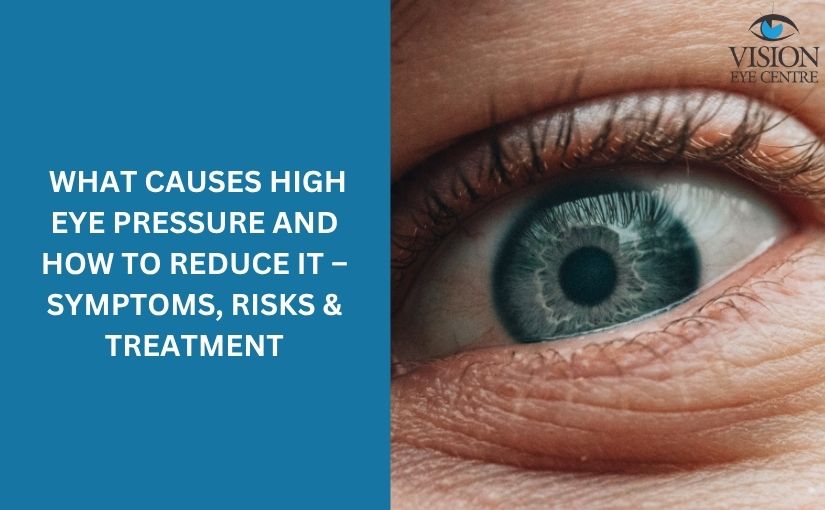
what causes high eye pressure and how to reduce it – Symptoms, Risks & Treatment
Apr 11, 2026
Introduction
Our eyes are incredibly complex organs that require a delicate balance of internal fluids to maintain their shape and function. Just like blood pressure in your body, your eyes have their own internal pressure. When this balance is disrupted, it can lead to a condition known as ocular hypertension. Many people do not realize they have this condition until they visit an eye clinic for a routine check-up, making it a hidden threat to long-term vision.
If you have recently been diagnosed with ocular hypertension, you are likely wondering what causes high eye pressure and how to reduce it. Leaving this condition unmonitored can lead to severe complications, including glaucoma and irreversible vision loss. In this comprehensive guide, Dr. Grover and the expert team at Vision Eye Centre will explain the mechanisms behind this condition, outline the potential risks, and provide actionable medical and lifestyle solutions to protect your eyesight.
What is High Eye Pressure (Ocular Hypertension)?
To understand the condition, it helps to know how the eye manages its internal environment. The front part of your eye is filled with a clear fluid called aqueous humor. This fluid is constantly being produced by the eye to nourish surrounding tissues. As new fluid is made, an equal amount of old fluid drains out through a spongy network of tissue called the trabecular meshwork, located at the drainage angle where the iris and cornea meet.
Eye pressure, or intraocular pressure (IOP), is measured in millimeters of mercury (mm Hg). A normal eye pressure reading typically falls between 10 and 21 mm Hg. When the eye pressure consistently measures higher than 21 mm Hg, it is diagnosed as high eye pressure or ocular hypertension. It is important to note that ocular hypertension itself is not a disease, but it is a major red flag that indicates you are at a higher risk of developing glaucoma.
The Main Triggers: what causes high eye pressure and how to reduce it
The root of ocular hypertension always traces back to an imbalance between the production and drainage of the aqueous fluid. Let's break down the specific medical reasons that trigger this imbalance:
1. Excessive Fluid Production In some cases, the ciliary body (the gland responsible for making aqueous humor) simply produces too much fluid. When the production rate exceeds the drainage rate, the pressure inside the eye naturally increases.
2. Inadequate Fluid Drainage This is the most common cause. If the trabecular meshwork becomes blocked, sluggish, or damaged, the fluid cannot exit the eye fast enough. This backup of fluid creates internal pressure, much like a clogged sink that continues to fill with water.
3. Certain Medications Steroid medications, particularly corticosteroid eye drops used to treat inflammation after eye surgery or for conditions like uveitis, are infamous for raising intraocular pressure. Asthma inhalers and nasal sprays containing steroids can also have a similar effect in susceptible individuals.
4. Eye Trauma or Injury A physical injury to the eye can alter the delicate structures responsible for fluid drainage. This can happen immediately after an injury or even months or years later.
5. Other Underlying Eye Conditions Conditions such as pseudoexfoliation syndrome (where flaky material builds up in the eye) or pigment dispersion syndrome (where pigment granules from the iris clog the drainage angle) can heavily contribute to elevated eye pressure.
Symptoms of High Eye Pressure
One of the most dangerous aspects of ocular hypertension is that it is completely asymptomatic. You cannot feel high eye pressure. It does not cause pain, redness, or blurry vision in its early stages. You will not see halos around lights, and your eyes will not feel heavy.
Because there are no warning signs, the only way to know if your intraocular pressure is elevated is through a comprehensive eye exam. This silent nature is why regular check-ups at Vision Eye Centre are so vital for adults, especially those over the age of 40. By the time symptoms like peripheral vision loss occur, the condition has already progressed to glaucoma, and the optic nerve damage is permanent.
Diagnosis: How We Measure Eye Pressure
Accurate diagnosis is the first step in managing ocular health. When you visit Dr. Grover for an evaluation, our team will perform a series of painless tests to assess your intraocular pressure and the overall health of your eyes.
-
Tonometry: This is the primary test used to measure IOP. A small instrument gently touches the surface of the eye (after numbing drops are applied) or uses a puff of air to measure the resistance of the cornea.
-
Pachymetry: Corneal thickness can influence eye pressure readings. Thicker corneas can give falsely high readings, while thinner corneas can give falsely low readings. Pachymetry measures this thickness for an accurate assessment.
-
Ophthalmoscopy & OCT Scans: We will examine your optic nerve for any signs of damage or cupping, using advanced imaging technology to ensure the high pressure has not started to affect the nerve fibers.
-
Visual Field Testing: This checks your peripheral vision to rule out any early signs of glaucoma.
Treatment Options
When exploring what causes high eye pressure and how to reduce it, treatments are highly personalized. The goal is always to lower the pressure before it causes optic nerve damage.
1. Prescription Eye Drops This is the first line of defense. There are several classes of eye drops:
-
Prostaglandins: Help increase the outflow of fluid from the eye.
-
Beta-blockers: Reduce the amount of fluid the eye produces.
-
Alpha-adrenergic agonists: Work by both reducing fluid production and increasing drainage.
2. Laser Therapy (SLT) If eye drops are ineffective or cause intolerable side effects, Selective Laser Trabeculoplasty (SLT) may be recommended. This quick, in-office laser procedure helps open up the drainage angle, allowing fluid to flow more freely.
3. Minimally Invasive Glaucoma Surgery (MIGS) In advanced cases, surgical intervention may be necessary to create new drainage channels. Our specialists will discuss the best surgical options based on your specific eye anatomy.
Comparison: Ocular Hypertension vs. Glaucoma
It is easy to confuse these two terms. Here is a clear breakdown of the differences:
Risks and Side Effects
The absolute biggest risk of unmanaged ocular hypertension is the development of primary open-angle glaucoma. High pressure physically compresses the sensitive optic nerve fibers at the back of the eye, causing them to die off. Once these fibers die, the vision lost cannot be restored.
Regarding treatment side effects, prescription eye drops can sometimes cause mild redness, a stinging sensation upon application, or changes in eyelash growth. It is crucial to communicate any side effects with Dr. Grover so your medication can be adjusted rather than stopping it completely.
Recovery and Prevention Tips
While you cannot always prevent the physiological factors that cause elevated IOP, you can adopt habits to support your eye health and reduce your risks:
-
Routine Eye Exams: Early detection is your best defense. Schedule annual comprehensive eye exams.
-
Maintain a Healthy Diet: Eat foods rich in antioxidants, vitamins C and E, zinc, and omega-3 fatty acids to support optic nerve health.
-
Exercise Regularly: Moderate aerobic exercise, like brisk walking or swimming, can help lower intraocular pressure safely.
-
Limit Caffeine: High doses of caffeine can cause a temporary spike in eye pressure. Try to limit coffee and energy drinks.
-
Elevate Your Head: Using a wedge pillow to elevate your head slightly while sleeping can help reduce eye pressure during the night.
When to See a Doctor
If you have a family history of glaucoma, are over the age of 40, have diabetes, or have experienced previous eye injuries, you are in a high-risk category. Do not wait for symptoms to appear, because high eye pressure will not give you any warning signs.
If you want a definitive answer to what causes high eye pressure and how to reduce it tailored to your specific health profile, it is time to seek expert advice. Please book an appointment with our specialists for a thorough evaluation.
Conclusion
Navigating ocular health can feel overwhelming, but understanding what causes high eye pressure and how to reduce it is the most powerful step you can take toward preserving your sight. By understanding the balance of fluid production and drainage, recognizing the silent nature of the condition, and adhering to prescribed treatments, you can prevent ocular hypertension from progressing into permanent vision loss.
At Vision Eye Centre, Dr. Grover and our dedicated team are committed to providing you with the highest standard of preventative and corrective eye care. Do not leave your vision to chance. Consult a specialist today and take control of your long-term eye health.
Frequently Asked Questions (FAQs)
Q1. What causes high eye pressure and how to reduce it naturally? While you should always rely on medical treatments prescribed by your doctor, you can support natural reduction by engaging in moderate aerobic exercise, reducing caffeine intake, staying hydrated, and eating a diet rich in antioxidants and omega-3 fatty acids.
Q2. Does screen time cause high eye pressure? No, staring at a computer or smartphone screen does not cause high intraocular pressure. It can cause digital eye strain and dry eyes, but it will not directly affect the fluid drainage inside your eyeball.
Q3. Is high eye pressure curable? Ocular hypertension is a chronic condition, meaning it cannot be "cured" in the traditional sense, but it can be highly successfully managed and controlled using eye drops, laser therapy, or surgery to keep the pressure within a safe, normal range.
Q4. Can stress cause my eye pressure to go up? Extreme emotional stress can cause temporary fluctuations in blood pressure and heart rate, which may have a minor, temporary impact on eye pressure, but stress itself is not considered a primary medical cause of sustained ocular hypertension.
Q5. Can I go blind from high eye pressure? High eye pressure alone does not cause blindness. However, if left untreated, it is the leading risk factor for developing glaucoma. Glaucoma damages the optic nerve and can lead to permanent, irreversible blindness.
Q6. Do I have to use eye drops forever if I am diagnosed? Often, patients need to use pressure-lowering eye drops long-term to keep their IOP in a safe range. However, if you undergo laser therapy (like SLT) or a surgical procedure, your reliance on daily drops may be significantly reduced or eliminated. Always consult with Dr. Grover before changing your medication routine.