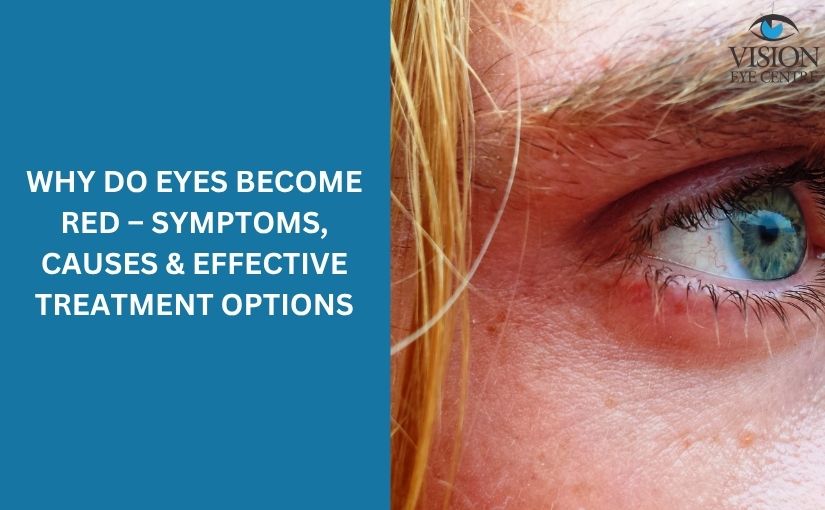
why do eyes become red – Symptoms, Causes & Effective Treatment Options
Apr 11, 2026
Introduction
Waking up with bloodshot eyes can be an alarming experience. You might feel a scratchy sensation, excessive tearing, or simply notice a bright pinkish hue in the mirror. Have you ever wondered why do eyes become red? While it is a very common issue, red eyes should never be ignored. Often, it is just a sign of fatigue or minor irritation, but in some cases, it can indicate a more serious underlying eye condition that requires professional medical attention.
At Vision Eye Centre, our goal is to help you maintain clear, comfortable, and healthy vision. In this comprehensive guide, we will explore the root causes of bloodshot eyes, identify accompanying symptoms, and discuss the most effective treatment options available to help you find quick and lasting relief.
What is a Red Eye?
A red eye occurs when the tiny blood vessels located on the surface of the eye (the sclera) become enlarged, dilated, or inflamed. Normally, these blood vessels are practically invisible. However, when the eye is irritated, infected, or overworked, these vessels expand as an immune response, bringing more blood to the area to help heal the irritation. This sudden rush of blood is what creates the noticeable pink or red appearance.
Common Causes: why do eyes become red?
Understanding the root cause is the first step toward effective treatment. There are numerous reasons your eyes might lose their clear white appearance. Here are the most common culprits:
1. Allergies Allergic reactions are a leading cause of eye redness. When your eyes are exposed to allergens like pollen, pet dander, dust mites, or mold, your immune system releases histamine. This chemical causes the blood vessels in the eyes to swell, leading to redness, intense itching, and watering.
2. Conjunctivitis (Pink Eye) Conjunctivitis is an inflammation or infection of the conjunctiva, the clear membrane covering the white part of your eye. It is highly contagious and can be viral, bacterial, or allergic. Alongside redness, it often causes a sticky discharge that can crust over during sleep.
3. Dry Eye Syndrome Tears are essential for keeping the eyes lubricated and smooth. When your tear glands do not produce enough tears, or produce poor-quality tears, your eyes become dry and irritated. This constant friction causes the blood vessels to inflame. You can learn more about managing this condition through the specialized dry eye treatments at Vision Eye Centre.
4. Digital Eye Strain In today's digital age, we spend hours staring at computers, smartphones, and tablets. When we look at screens, our blink rate drops significantly. This lack of blinking dries out the eyes and causes severe strain, leading to a bloodshot appearance by the end of the day.
5. Contact Lens Complications Wearing contact lenses for too long, sleeping in them, or failing to clean them properly can irritate the surface of your eye. This can lead to a lack of oxygen reaching the cornea, prompting the blood vessels to enlarge and potentially causing serious infections.
6. Glaucoma Acute angle-closure glaucoma is a serious medical emergency. It occurs when the fluid pressure inside the eye rises rapidly. This condition causes sudden, severe redness, intense eye pain, halos around lights, and blurred vision.
Symptoms Associated with Red Eyes
Redness rarely occurs on its own. Depending on the underlying cause, you may also experience a variety of other symptoms. Paying attention to these signs will help your eye specialist determine the right treatment plan:
-
Intense itching or a burning sensation.
-
Gritty feeling, as if there is sand or a foreign object in your eye.
-
Excessive watering or tearing.
-
Thick yellow, green, or clear discharge.
-
Sensitivity to light (photophobia).
-
Swollen or puffy eyelids.
-
Blurred or fluctuating vision.
Diagnosis: Getting to the Root of the Problem
If you find yourself constantly asking your doctor why do eyes become red, it is time for a comprehensive eye examination. A qualified ophthalmologist will perform a thorough evaluation of your eye health.
During your visit, the doctor will review your medical history and ask about your symptoms. They will use a slit-lamp microscope to examine the structures of your eye under high magnification. This allows them to check the cornea, conjunctiva, and eyelids for signs of infection, foreign bodies, or dry spots. If glaucoma is suspected, they will also measure your intraocular pressure (IOP).
Treatment Options for Red Eyes
The treatment for red eyes depends entirely on the specific cause. Here are the most effective treatment options:
1. Over-the-Counter Artificial Tears For mild redness caused by dry environments, fatigue, or digital strain, preservative-free lubricating eye drops can provide instant, soothing relief.
2. Antihistamine Drops If allergies are the trigger, your doctor may prescribe antihistamine eye drops or oral allergy medications to reduce the histamine response and calm the itching and redness.
3. Antibiotic or Antiviral Medications If you are diagnosed with bacterial pink eye, you will need prescription antibiotic eye drops or ointments. Viral pink eye usually resolves on its own, but cool compresses can help manage the symptoms.
4. Warm or Cold Compresses A clean, cold compress can reduce swelling and itching from allergies, while a warm compress can help unblock clogged tear ducts and soothe dry eyes.
5. Proper Contact Lens Care If lenses are the issue, your doctor may recommend switching to daily disposables, changing your cleaning solution, or taking a break from wearing lenses until the eyes heal.
Risks and Side Effects of Untreated Red Eyes
Ignoring persistent redness can lead to severe complications. For instance, an untreated bacterial infection or a corneal ulcer can cause permanent scarring on the cornea, leading to irreversible vision loss. Similarly, if the redness is caused by acute glaucoma and is left untreated, it can cause permanent blindness within a matter of days. Furthermore, overusing "get-the-red-out" whitening eye drops can cause a rebound effect, making your eyes even redder once the medication wears off.
Comparing Types of Conjunctivitis
To help you understand the differences in infections, here is a quick comparison table:
Recovery and Prevention Tips
Preventing red eyes is often a matter of adopting healthy daily habits. Here are a few proactive steps you can take:
-
Practice the 20-20-20 Rule: When working on a computer, look away every 20 minutes at an object 20 feet away for at least 20 seconds to reduce digital eye strain.
-
Maintain Eyelid Hygiene: Wash your hands frequently and avoid rubbing your eyes to prevent transferring dirt and bacteria.
-
Remove Makeup: Always remove eye makeup before going to bed to prevent clogged tear glands.
-
Wear Sunglasses: Protect your eyes from harsh UV rays, wind, and dust by wearing high-quality wraparound sunglasses when outdoors.
-
Stay Hydrated: Drink plenty of water throughout the day to support natural tear production.
When to See a Doctor
While minor redness from a long day can clear up with a good night's sleep, certain symptoms warrant immediate medical care. You should book a consultation if you experience:
-
Severe eye pain or deep throbbing.
-
A sudden change in your vision, such as blurriness or double vision.
-
Extreme sensitivity to light.
-
Redness that lasts for more than a couple of days.
-
A thick, yellow, or greenish discharge.
-
A recent eye injury or chemical splash.
If you experience any of these warning signs, do not delay. Consult with Dr. Grover and the expert medical team at Vision Eye Centre. We provide comprehensive diagnostics and advanced treatments for all ocular emergencies. You can easily find our clinic locations and contact details to seek immediate help.
Conclusion
Your eyes are incredibly delicate and complex organs. Understanding why do eyes become red helps you take better care of your vision and recognize when it is time to seek professional help. Whether it is a simple case of digital eye strain or a more complex infection, prompt diagnosis and targeted treatment are key to maintaining long-term eye health. Remember, never self-diagnose severe eye symptoms.
If you are struggling with persistent red eyes, irritation, or vision changes, we are here to help. Book an appointment today and let our specialists guide you toward clearer, healthier vision. Consult a specialist at Vision Eye Centre to schedule your comprehensive eye exam.
Frequently Asked Questions (FAQs)
Q1: Exactly why do eyes become red after looking at screens for a long time? Answer: When you stare at a digital screen, your blink rate decreases by up to 60%. Blinking is necessary to spread tears across the surface of the eye. A lower blink rate leads to tear evaporation, causing dryness, irritation, and the dilation of blood vessels, which results in redness.
Q2: Can I use over-the-counter whitening drops every day? Answer: No, it is not recommended. Whitening drops contain decongestants that temporarily shrink blood vessels. Overusing them can cause a "rebound effect," where the blood vessels become completely dependent on the drops and actually expand larger than before when the drops wear off, making your eyes chronically red.
Q3: Is a red eye always a sign of pink eye (conjunctivitis)? Answer: No. While pink eye is a common cause, red eyes can also be triggered by allergies, dry eye syndrome, contact lens irritation, fatigue, or more severe conditions like glaucoma or uveitis. Proper medical diagnosis is essential.
Q4: Can a lack of sleep cause my eyes to turn red? Answer: Yes. Sleep is the time when your eyes recover and replenish their natural moisture. A lack of adequate sleep reduces tear circulation, leading to dry, strained, and visibly bloodshot eyes the next morning.
Q5: How can I tell if my red eye is caused by an allergy or an infection? Answer: Allergic red eyes are typically accompanied by intense, severe itching and usually affect both eyes simultaneously. An infection like bacterial pink eye often starts in one eye, features a thick, sticky yellowish discharge, and makes the eyelids stick together upon waking.
Q6: Should I stop wearing my contact lenses if my eyes are red? Answer: Yes, absolutely. If your eyes are red and irritated, immediately remove your contact lenses and switch to glasses. Continuing to wear lenses over an irritated or infected eye can trap bacteria against the cornea, leading to painful ulcers and serious vision threats.