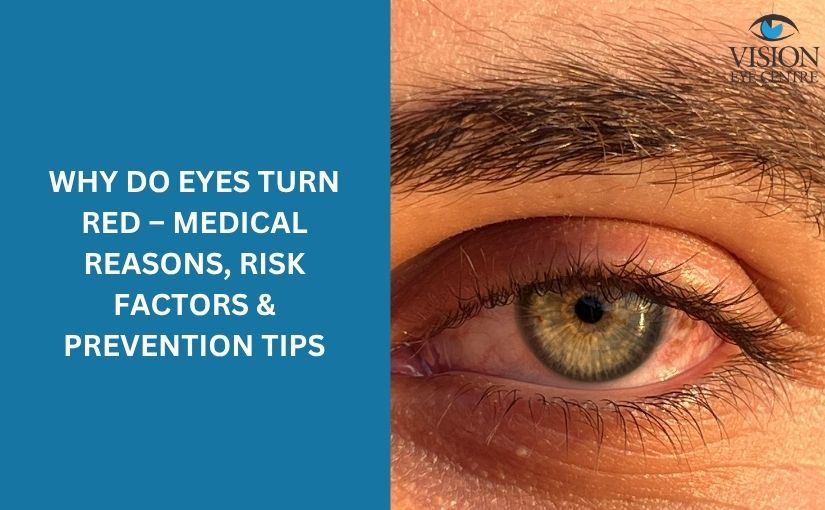
why do eyes turn red – Medical Reasons, Risk Factors & Prevention Tips
Sep 21, 2026
Introduction
We have all experienced it: you wake up, look in the mirror, and are startled to see that the whites of your eyes have turned a bright, irritated pink or deep crimson. If you have ever asked yourself, why do eyes turn red, you are certainly not alone. It is one of the most common eye-related complaints globally, affecting people of all ages. While a bloodshot eye can look incredibly alarming, it is often the result of minor, easily treatable issues like fatigue or seasonal allergies.
However, redness can sometimes act as a warning sign for more severe underlying medical conditions that require immediate attention to protect your vision. In this comprehensive guide, the experts at Vision Eye Centre will help you understand the root causes of bloodshot eyes, identify accompanying symptoms, and explore effective treatments and prevention strategies so you can maintain clear, healthy vision.
What is a Red Eye?
To understand the mechanics behind this condition, we must look at the anatomy of the eye. The white part of your eye is known as the sclera. Covering the sclera is a thin, clear, protective membrane called the conjunctiva. This membrane contains a dense network of tiny, normally invisible blood vessels.
When your eyes are exposed to irritants, allergens, or infections, these blood vessels become inflamed. As a result, they dilate (expand) and fill with blood, making them highly visible against the white background of the sclera. This dilation is the physiological answer to why do eyes turn red. The severity can range from a few prominent, squiggly red lines to the entire sclera appearing completely blood-red.
Medical Reasons: why do eyes turn red?
There are numerous factors that can cause the blood vessels in your conjunctiva to expand. Identifying the exact trigger requires evaluating your environment, habits, and overall health. Here are the most common causes:
1. Conjunctivitis (Pink Eye)
Conjunctivitis is an inflammation or infection of the conjunctival membrane and is one of the most frequent causes of redness. It can be viral, bacterial, or allergic. Viral and bacterial pink eye are highly contagious and easily spread in schools or workplaces.
2. Dry Eye Syndrome
Tears are essential for keeping the surface of your eyes lubricated, nourished, and clear. When your tear glands do not produce enough tears, or the tears evaporate too quickly, you develop dry eye syndrome. The chronic friction from blinking without enough lubrication irritates the eye, causing the blood vessels to swell and turn red.
3. Environmental Allergies
If you only experience redness during certain seasons or around specific animals, allergies are likely the culprit. When dust mites, pollen, pet dander, or mold enter the eye, the immune system releases histamine. This chemical causes intense itching, tearing, and widespread redness.
4. Digital Eye Strain (Computer Vision Syndrome)
In the modern world, many people wonder why do eyes turn red after a long day at the office. The answer is digital eye strain. When we stare at computer screens, smartphones, or tablets, our natural blink rate drops by more than 60%. This drastically reduces the moisture on the eye's surface, leading to severe dryness and redness by the end of the day.
5. Subconjunctival Hemorrhage
Sometimes, a single tiny blood vessel breaks just beneath the surface of the eye, forming a bright red patch. This is known as a subconjunctival hemorrhage. While it looks terrifying, it is usually harmless and painless. It can be triggered by a heavy cough, intense sneezing, heavy lifting, or even rubbing your eye too aggressively.
6. Acute Angle-Closure Glaucoma
This is a severe medical emergency. Glaucoma is a condition where the fluid pressure inside the eye suddenly spikes. Along with a deep, dark red eye, patients experience extreme eye pain, nausea, and blurred vision. This requires immediate intervention to prevent permanent blindness.
Common Symptoms
Redness is rarely the only symptom. Paying attention to what else you are feeling can help pinpoint the exact cause. Accompanying symptoms often include:
-
Intense itching or a burning sensation.
-
A gritty feeling, as if sand is trapped in the eye.
-
Watery, clear discharge or thick, yellowish-green mucus.
-
Increased sensitivity to light (photophobia).
-
Swelling and puffiness of the eyelids.
-
Blurred vision or seeing halos around lights.
Diagnosis: Finding the Root Cause
Because red eyes can stem from a simple lack of sleep to a severe infection, a professional diagnosis is vital. At Vision Eye Centre, Dr. Grover and our dedicated team of specialists use advanced diagnostic equipment to evaluate your ocular health.
During your consultation, the doctor will review your medical history and perform a comprehensive physical exam using a slit-lamp microscope. This allows us to see the magnified structures of the front of your eye. We may also check your intraocular pressure to rule out glaucoma or use specialized fluorescein dye drops to check for scratches or ulcers on the cornea.
Treatment Options
Treatment is highly dependent on the diagnosis. Using the wrong medication can sometimes make the redness worse, which is why self-medicating is not advised. Common treatments include:
-
Artificial Tears: Over-the-counter lubricating drops are excellent for soothing dry eyes and washing away minor irritants.
-
Antihistamine Drops: For allergic reactions, prescription or over-the-counter antihistamine drops reduce the release of histamine, calming the redness and itching.
-
Antibiotics: If the redness is caused by bacterial conjunctivitis or a corneal ulcer, prescription antibiotic eye drops or ointments are strictly necessary to eliminate the infection.
-
Warm and Cold Compresses: A cold compress can reduce the swelling and itchiness associated with allergies, while a warm compress helps stimulate tear production for dry eyes.
Comparison Table: Different Types of Red Eye
| Feature | Viral Conjunctivitis | Allergic Reaction | Dry Eye Syndrome | Subconjunctival Hemorrhage |
| Primary Cause | Viral infection (like a cold) | Pollen, dust, pet dander | Lack of adequate tears | Broken blood vessel |
| Discharge Type | Clear and watery | Watery and stringy | Little to none | None |
| Pain Level | Mild discomfort | Intense itching | Burning or gritty feeling | Painless |
| Appearance | Diffuse pink/redness | Diffuse redness, swollen lids | Mild redness | Solid, bright red patch |
| Contagious? | Yes, highly contagious | No | No | No |
Risks and Side Effects of Ignoring the Problem
While asking why do eyes turn red usually leads to a benign answer, dismissing persistent redness carries major risks. Untreated eye infections can lead to corneal scarring, which permanently impairs vision. Additionally, relying heavily on over-the-counter "redness-relief" (decongestant) eye drops can cause a severe rebound effect. When these drops wear off, your blood vessels dilate even larger than before, creating a cycle of dependency and chronic redness.
Recovery and Prevention Tips
Protecting your eyes daily is the most effective way to keep the whites of your eyes bright and healthy. Incorporate these habits into your lifestyle:
-
Follow the 20-20-20 Rule: To combat digital eye strain, look away from your screen every 20 minutes, focus on an object at least 20 feet away, and hold your gaze for 20 seconds.
-
Practice Good Hygiene: Wash your hands frequently with soap and water. Never rub your eyes with unwashed hands, as this introduces bacteria and irritants.
-
Manage Contact Lenses Properly: Never sleep in your contact lenses unless approved by your doctor. Clean them daily with fresh solution and replace them as scheduled.
-
Remove Makeup: Always remove eyeliner and mascara before bed to prevent blocked tear and oil glands along the eyelid margins.
-
Wear Protective Eyewear: Use high-quality, UV-blocking sunglasses when outdoors to protect against wind, dust, and harsh solar radiation.
When to See a Doctor
While mild irritation often resolves on its own, certain symptoms indicate a medical emergency. You should immediately book an appointment with an eye care professional if your red eyes are accompanied by:
-
Sudden, severe, or throbbing eye pain.
-
Changes in your vision, such as blurriness or double vision.
-
Extreme sensitivity to indoor lights or the sun.
-
A thick, sticky discharge that glues your eyelids shut upon waking.
-
Redness following a physical injury, chemical splash, or trauma to the eye.
Conclusion
Knowing why do eyes turn red empowers you to make better decisions about your ocular health. Most cases are harmless and easily managed with simple lifestyle adjustments, hydration, and proper screen habits. However, persistent or painful redness should never be ignored, as it is your body's way of signaling that something is wrong.
Prioritize your vision and do not take chances with your eye health. If you are struggling with chronic redness, irritation, or vision changes, reach out for professional care. Consult a specialist at Vision Eye Centre today, and let Dr. Grover and our expert team help you maintain comfortable, crystal-clear vision for years to come.
Frequently Asked Questions (FAQs)
Q1: Can a lack of sleep cause my eyes to turn red?
Yes. Sleep allows your eyes to rest, rehydrate, and flush out irritants. A lack of sleep disrupts this process, causing the blood vessels to dilate and the eyes to appear bloodshot and feel gritty.
Q2: Are "redness-relief" eye drops safe to use every day?
No, it is highly recommended to avoid using redness-relief eye drops daily. These drops contain decongestants that forcefully shrink blood vessels. Overuse leads to a rebound effect, making your eyes chronically red once the medication wears off. Stick to preservative-free artificial tears instead.
Q3: How long does it take for a red eye to heal?
The healing time depends entirely on the cause. Dryness or fatigue can clear up in a few hours with artificial tears and rest. A subconjunctival hemorrhage may take 1 to 2 weeks to naturally reabsorb, while bacterial pink eye will require a few days of prescription antibiotics to clear.
Q4: Can wearing contact lenses make my eyes red?
Yes, improper use of contact lenses is a major cause of redness. Sleeping in lenses, wearing them for too many hours, or failing to clean them properly can lead to severe dryness, corneal abrasions, and serious bacterial infections.
Q5: What should I do if my red eye is painful and my vision is blurry?
A red eye accompanied by pain and blurry vision is a major red flag and could indicate a serious condition like acute glaucoma or a corneal ulcer. You should seek emergency medical care from an eye specialist at Vision Eye Centre immediately to prevent vision loss.